
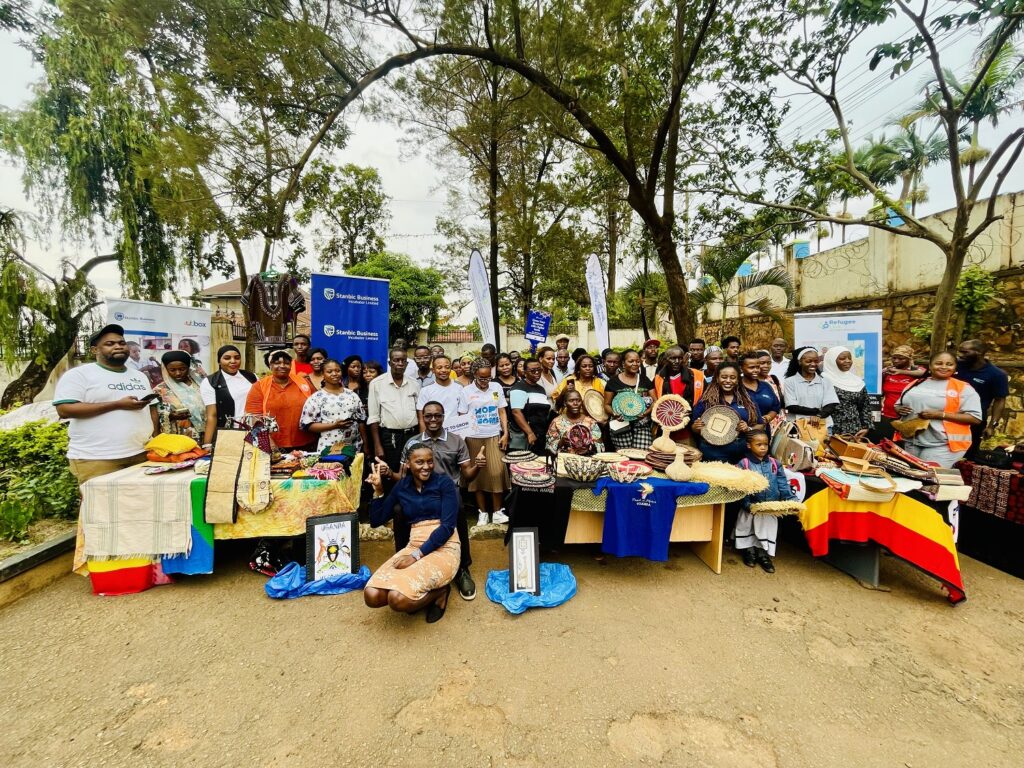
Over 70 refugee entrepreneurs gathered in Kampala on February 17, 2026, for a transformative moment in Uganda’s economic inclusion landscape. RefugeeLINK, in partnership with Stanbic Business Incubator, hosted an outreach event for the 10X Foundational Program at our Balintuma Road offices, bringing together owners and staff of refugee-led micro, small, and medium enterprises for an immersive half-day session. This was not merely an introduction to training resources but the launch of structured digital and business skills development, complete with live platform onboarding.
The event addressed four critical objectives: expanding access to practical digital entrepreneurship training, strengthening refugee-led enterprises through structured incubation, promoting financial readiness and long-term sustainability, and demonstrating a scalable private-sector partnership model for refugee economic inclusion. Leon Kalonda of RefugeeLINK moderated the proceedings, with Corinne Chance providing interpretation to ensure meaningful participation across linguistic and cultural backgrounds.
DAPHINE KWARISIIMA from Stanbic delivered a compelling session on the imperative of dual-channel operations, emphasizing how digital visibility, expanded customer reach, and online payment systems have become non-negotiable elements of modern marketplace participation. The discussion moved beyond theory into immediate practical application, with participants recognizing the concrete steps required to remain competitive.
A particularly resonant moment emerged during the recognition of formally registered refugee businesses. This acknowledgment carried profound significance, representing not just administrative compliance but a declaration of economic legitimacy, willingness to contribute to Uganda’s formal economy, and the dismantling of barriers that have historically excluded displaced populations from productive participation.
The session culminated in live onboarding onto the 10X Foundational Course, providing these 70-plus enterprises with structured pathways toward growth, operational resilience, and market competitiveness. The energy in the room reflected something deeper than training enthusiasm, it signaled a collective recognition that refugee entrepreneurship in Uganda is transitioning from survivalist necessity to strategic business development. Partnerships between community-based organizations and established financial institutions can create genuine economic mobility when designed with dignity and scalability at their core.