
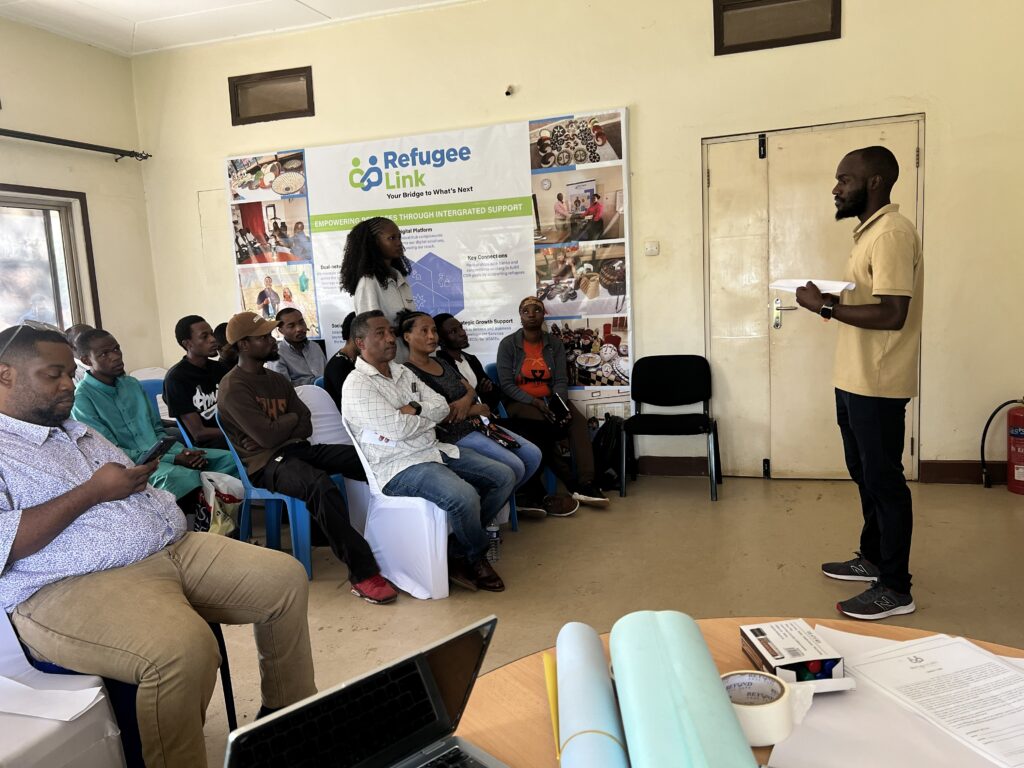
What does economic inclusion truly mean for urban refugees? On January 27th 2026, RefugeeLINK sought answers directly from the source. We hosted Focus Group Discussions with over 40 urban refugees at our Mengo office in Kampala, creating a space to listen to their daily realities as individuals and as entrepreneurs.
The conversations revealed a clear portrait of resilience meeting systemic barriers. A central insight was that entrepreneurship is a necessity, not a choice. The micro-businesses they operate are vital lifelines, yet they struggle in informal economies, often excluded from formal financial systems and stable markets. Furthermore, while participants demonstrated impressive skills and determination, these assets are stifled by systems that do not respond. Critical gaps in tailored business support, documentation, and market access continue to limit their potential. Finally, we saw how current gaps in economic integration hold back shared prosperity. These refugees are eager to contribute to their host community’s economy, but they face policies and programs that rarely account for their unique circumstances.
For RefugeeLINK, this dialogue is essential. It ensures our advocacy and livelihood programs are informed by evidence and lived experience, steering us toward solutions that promote genuine dignity and self-reliance. The conclusion is clear: empowering refugee entrepreneurs is not merely a humanitarian effort, but a critical development imperative.
The challenge now is for all actors—humanitarian, development, and private sector—to collaborate on designing solutions that recognize and invest in the economic potential of urban refugees.