
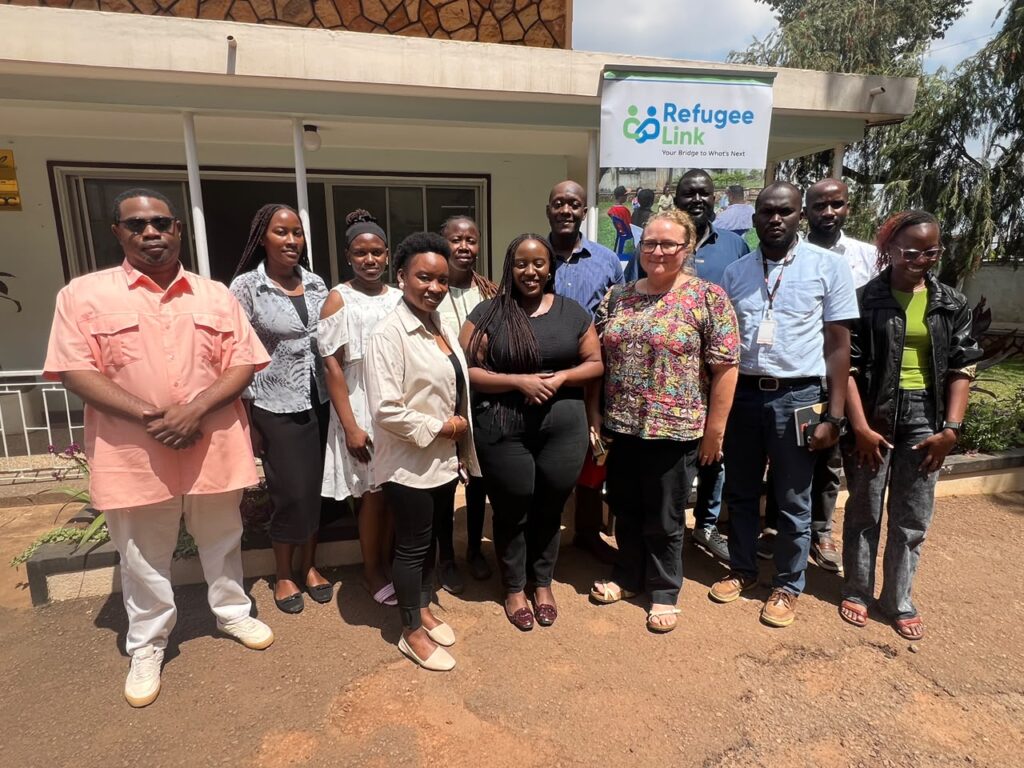
On 8th October 2026, RefugeeLINK and the Norwegian Refugee Council (NRC) Uganda held an engagement to explore opportunities for collaboration aimed at strengthening economic inclusion and self-reliance among refugees in Uganda.
The engagement brought together perspectives from humanitarian, private-sector and refugee-led approaches, with discussions focusing on employment, entrepreneurship, financial inclusion, digital skills, evidence generation and access to services.
A key theme was the importance of recognising refugees not only as recipients of assistance, but also as economic actors who own businesses, provide services, create employment, pay taxes and contribute to local economies. Participants discussed the need to strengthen connections between refugees and private-sector opportunities while addressing practical barriers affecting access to employment, finance and business formalisation.
The discussion also highlighted the importance of helping employers better understand the legal framework around refugee employment and the value refugees can bring through their professional experience, technical capabilities and multilingual skills. Potential opportunities in areas such as business process outsourcing, digital work and other technology-enabled employment were considered.
Financial inclusion was another area of interest, particularly for small and women-owned refugee businesses. Supporting entrepreneurs with business registration, tax identification, financial literacy and appropriate financial products can help create stronger pathways towards sustainable livelihoods.
Both organizations also recognised the importance of evidence and coordination. Better data on refugee businesses, employment, taxation and economic participation can support advocacy and help demonstrate the contribution refugees make to Uganda’s economy.
The engagement pointed towards practical collaboration, including joint evidence generation, private-sector engagement, skills development, financial inclusion and community-level access to services. RefugeeLINK and NRC expressed interest in identifying practical areas where their respective strengths can complement each other and generate tangible opportunities for refugees and host communities.